Italy ranks first in Europe in terms of the number of fitness centers, but only fourth in terms of revenue. About 7,500–8,000 active facilities, just under 5 million members, and a market worth around 3.1 billion euros. Put simply: we have more gyms than almost anyone else, but fewer regular gym-goers than the European average.
For those who run a gym, a personal training studio, or a functional training center, the implication is clear. The game isn’t about demand—which exists and is growing—but about two much more concrete variables: how many of the people who contact you do you actually manage to convert, and how many of those you sign up are still there after twelve months.
Yet, when a business stops growing, the most common reaction is always the same: increase visibility. More content, more campaigns, more promotions. It’s the most intuitive response and, in most cases, the least effective, because it addresses the one part of the process that’s probably not broken.
This article takes the opposite approach. Start with the numbers you should already have under control, break down the path that takes a person from the first message to renewal, and go where no advertising campaign can reach: the physical limits of your facility.
The Seven Numbers You Need to Know Before Touching Your Advertising Budget
Most centers are unable to answer basic questions about their sales funnel. How many leads came in last month? How many booked a trial? How many showed up? How many signed up? Without these four figures, it is impossible to determine whether the problem lies in visibility, the quality of leads, or sales capabilities—and therefore, it is impossible to invest in the right area.
Here are the industry benchmarks to measure yourself against. These are market values: your business type, your area, and your positioning will affect them, but they help you understand where you stand.
| Indicator | Industry Benchmark | What does it mean if you’re below? |
| Annual Retention | The industry average is 66.4%. The target for boutiques and specialized firms is 75–80%. The typical range for in-house legal counsel is 74–82%. | The problem almost always lies in the first 90 days, not in the acquisition itself |
| Monthly Churn | Below 3%: excellent. 3–4%: solid. Above 5–6%: structural work needed | You’re filling a bucket with a hole in it: every euro spent on marketing is used to replace, not to grow |
| Indicator | Referencebyindustry | What does it mean if you’re below? |
| Contact → Scheduled Test | 40–50% with a structured follow-up protocol | It’s not a problem with contacts; it’s a problem with responses |
| Reserved→showed up | 85–95% with reminders enabled | Your conversion rate is skewed: you’re measuring the wrong metrics |
| Try it→customer | 50–70% with guided testing and follow-up. 20–40% in high-volume models | The test isn’t showing what sets you apart, or the next step is missing |
| Contact → Customer (total) | 10–15% on average. Over 20% in centers with a defined sales process | To sum up all the points above: start with the weakest link |
| Average frequency per week | 2.5–3.5 sessions per active subscriber | It’s the best predictor of churn you have: if it’s below 1.5, the customer is already leaving |
It’s worth clarifying the first figure, because it’s the most frequently cited—and most inaccurate—benchmark in the industry. The 71.4% retention rate that appears in dozens of articles and sales presentations is based on a 2016 survey using 2015 data. The most reliable updated figure currently available is 66.4%, based on a survey of 175 companies and over 17,000 facilities across 27 countries. The average retention rate has fallen by about five points over the past ten years: if you’ve ever seen a rate of 71.4%, you’ve seen a figure that the market no longer reaches.
The Math of the Leaky Bucket
Here’s the calculation that makes everything immediately clear. Take a center with 200 members paying 70 euros per month, which amounts to approximately 168,000 euros in recurring annual revenue.
With a retention rate of 66%, it loses 68 in a year. To break even for the year, it needs to acquire 68 customers. To grow by 15%, it needs to acquire 98. At a realistic acquisition cost of 80–120 euros per customer, just to maintain its current position, it is spending between 5,400 and 8,100 euros a year.
The same center, with a retention rate of 78%, loses 44 customers. To grow by 15%, it needs 74 customers instead of 98. That’s 24 fewer customers to acquire, about 2,400 euros in cost savings, and, most importantly, twenty-four fewer sales negotiations to manage with the same staff.
Twelve retention points are worth more than any campaign you could buy with that amount of money. And they’re earned almost entirely in the first ninety days.

Before You Start Looking for More Customers: Who Are You Really Talking To?
In a market with 7,500–8,000 active facilities, messaging that tries to appeal to everyone ends up being forgotten by everyone. Weight loss, athletic training, functional training, bodybuilding, personal training, programs for beginners, and performance training —when presented all on the same level—lead to one specific result: they make the gym impossible to compare on any basis other than price.
It’s an almost automatic process. If a potential customer doesn’t understand within a few seconds why they should choose you over the gym that’s eight minutes from their home, they’ll base their decision on the only factor they can assess on their own. And when it comes to that factor in the Italian fitness industry, you’ll always lose out to someone else.
A personal training studio specializing in one-on-one training can build its reputation on initial assessments, personalized training programs, privacy, and the continuity of the relationship with the trainer. A functional training center can focus on the quality of coaching, the community, and the progression of training programs. A performance-oriented facility can highlight the expertise of its staff, specialized equipment, and the measurability of results.
Specializing doesn’t mean turning away other clients. It means making it immediately clear why the center exists.
Here’s the quickest test: open your website and your Instagram profile as if you were someone who doesn’t know you, and give yourself thirty seconds. Is it clear who you’re targeting, what results you promise, and what happens if they contact you? If the answer isn’t clear, increasing your ad budget means paying to drive more people to a message that doesn’t convert.
The local channel that almost no one really watches
Most fitness centers’ communication plans overlook the channel that, in all likelihood, generates more inquiries than all the others combined: local search.
Anyone who types in “gym near me,” “CrossFit box” followed by the name of the neighborhood, or “personal trainer” plus the city isn’t just browsing. They’ve already decided to sign up somewhere and are choosing where. It’s the hottest lead there is, and in almost all cases, it comes for free.
The Google Business Profile listing is the real conversion point for that traffic, and it’s treated like a profile form that you fill out once. Here’s what sets apart a listing that generates leads from one that loses them:
- The main category should be consistent with the positioning and not generic. “Gym” and “Personal Training Center” capture different search queries.
- Recent and ongoing reviews, not all posted at once. A simple process—such as requesting a review in the third month after a measured result—is worth more than any one-time campaign.
- Public response to all reviews, including negative ones. The response isn’t directed at the reviewer—it’s directed at the twenty potential customers who will read it next.
- Real, up-to-date photos of the venue—not renderings or stock images. This is the first thing a potential customer looks at, and it’s their first impression of the venue’s quality.
- FAQ section pre-filled by the operator: required levels, how the first class works, parking, class schedules.
- Messages are active only if someone responds within a few minutes. An open, unmonitored channel is worse than a closed one.
In addition to this, there are three channels that cost almost nothing and yield extremely high returns in the fitness sector: structured referrals—which are not the generic “bring a friend” program but rather a mechanism with a defined incentive and a specific time when it is offered; local partnerships with physical therapists, nutritionists, and sports physicians; and agreements with companies within a few kilometers.
When it comes to referrals, it’s worth noting one factor that changes how we view them: customers who come through word of mouth have significantly higher retention rates than those acquired through advertising. It’s not just the most cost-effective channel—it’s the one that brings in customers who stay the longest.
From Initial Contact to the Trial: The Protocol That Almost No One Puts in Writing
Someone posted on Instagram asking how much the subscription costs. The standard response is the price list. At that moment, the center turned a potential customer into just another price comparison—before even giving them a chance to perceive a single element of value.
The correct process reverses the order. First, you determine the client’s goals, prior experience, weekly availability, any physical limitations, and what hasn’t worked in the past. The price comes later, as part of a proposal that is presented in context.
But the most important factor isn’t what you say. It’s when.
The seminal study on this topic, published in the Harvard Business Review by Oldroyd, McElheran, and Elkington, analyzed more than 100,000 web leads collected by 2,241 companies. Those who respond within five minutes are about 100 times more likely to actually make contact with the person than those who respond after thirty minutes, and 21 times more likely to qualify them.
In the fitness industry, the gap is even more pronounced, for a simple reason: people looking for a gym almost always contact three or four facilities in the same afternoon. The first one to respond competently starts with an advantage that the others must make up for.
This is the minimum set of steps. You don’t need expensive software to implement it: it just needs to be written down, assigned to someone, and verified.
| Moment | Channel | Contents | Objective |
| Within 5 minutes | Text Message or WhatsApp | Confirmation of receipt of the request, the name of the person who will be assisting the individual, and an open-ended question about the goal | Take up mental space before your competitors do |
| Within 1 hour | Phone Call | Qualification: objective, experience, availability, background. No price at this stage | Turning a request for a price list into a conversation |
| At the end of the call | Phone Call | Suggest a specific date and time for the test, not “whenever you want” | Scheduling a Real Appointment |
| Moment | Channel | Contents | Objective |
| Right after that | Written summary of the date, time, what to bring, where to park, and the coach’s name | Reduce friction and excuses for not showing up | |
| 24 hours earlier | Personal reminder, not written in a formal tone | The single message that boosts the show-up rate the most | |
| 2 hours ago | Quick confirmation and the option to reschedule | Reaching those who would otherwise disappear | |
| If they don’t answer | Text message and phone call | At least 5 attempts spread over 10–14 days, then close the deal or transition to nurturing | Most centers stop after the second attempt |
One final note that’s worth more than the entire table: most leads lost in the fitness industry aren’t lost because of a wrong answer. They’re lost because no one called back a second time.
Show-up rate: the most overlooked metric in the funnel
Almost all centers calculate the conversion rate as the ratio of tests to enrollments. This is a measurement error that masks the real problem.
Two metrics must be kept separate: how many people book a trial and how many actually show up. When you break them down, many people discover that their “closing problem” was actually a show-up problem. These are two different issues and require two different solutions: the first is resolved by improving the sales pitch, and the second by sending reminders.
Let’s do the math based on a study that receives 40 trial requests per month. If 60% of them show up, that’s 24 people. If half of them complete a trial program with at least two sessions, that’s 12.
If half of them sign up, that’s 6 new customers: 15% of the initial leads.
By increasing the show-up rate from 60% to 85%—using only the reminders from the table above and nothing else—those 6 customers become 8 or 9. No extra advertising costs, no better deals. Just three well-written messages.
On an annual basis, at a facility with an average membership fee of 80 euros and an average membership duration of eleven months, approximately 26,000 euros in revenue is currently lost between the time of booking and the moment a member walks through the door.
The First 30 Days: When a Third of Your Revenue Is Determined
About half of new members stop attending within the first six months. Not because the facility is subpar, but because during those weeks, the member must take the most difficult step of all: turning a purchasing decision into a habit.
The statistic that should make anyone rethink their process is this: customers who complete a structured onboarding process are still active after six months at a rate very close to 90 percent, compared to about 60 percent of those who sign up and are left to fend for themselves. It is the single initiative with the highest return available to a manager, and it costs almost nothing.
A new member may feel lost even at an excellent facility. They aren’t familiar with the space, don’t know which weights to use, have trouble understanding the workout program, and, in classes, worry that they’re the least prepared. Onboarding is designed to eliminate these uncertainties before they become reasons for not returning.
| Moment | What Happens | Who does it? | What Is Being Measured |
| Day 0 | Initial Assessment: stated goal, history, baseline tests, definition of how progress will be measured | Coach or starter | Recorded baseline |
| Days 1–3 | Dedicated guided session: tour of the gym, use of equipment, starting weights, introduction to at least two regular clients | Coach | First session completed |
| Day 7 | Quick update: How did the first week go? What proved to be difficult? | Staff | Workouts Completed in the First 7 Days |
| Day 21 | In-person review of the program. First visible minor adjustment | Coach | Average weekly attendance |
| Day 30 | Alignment Meeting: What Has Changed Since the Baseline, Three-Month Goal | Coach or starter | Comparison with the data from Day 0 |
The level of personalization varies greatly between a one-on-one training studio and a gym with 600 members. The need to support the client during the first month remains exactly the same. And the warning sign is always the same: anyone who drops below one session per week in the first three weeks has already started to drift away, even though they’ll continue to pay for months to come.
Measuring Progress and Turning the Retest into a Renewal Conversation
In the fitness industry, much of the value created is not immediately apparent. Clients improve their strength, cardiovascular fitness, technique, and mobility without realizing how much they’ve changed. If that change isn’t measured and reported back to them, after a few months they begin to feel as though they’ve made no progress—even when the data shows otherwise. And that’s when they cancel their membership.
There’s no need to turn the center into a workshop. We need a few indicators that are consistent with the service and measured at regular intervals.
| Type | Minimum battery level | Cadence |
| PT studio | Composition or circumference, strength training focused on 2–3 core patterns, mobility training for 2 critical areas, functional goal specified by the client | Every 8 weeks |
| Functional and Box | Repeatable benchmark, a maximum or submaximal test, a metabolic test, technical quality in a progressive movement | Every 10–12 weeks |
| Strength & conditioning | Maximum limits on major lifts, strength tests, conditioning markers for equal workloads | At the end of each block |
| Fitness Center | Workloads used, heart rate for the same level of exertion, and body measurements when relevant | Every 12 weeks |
The part that almost everyone misses is the next step. The follow-up isn’t just a technical formality—it’s the best sales conversation you’ll have with that client all year.
The moment you show them, with data in hand, what has changed in ten weeks and what can change in the next ten, renewal stops being a spending decision and becomes the natural continuation of a journey. You’re not asking them to pay for access to a room; you’re offering the next chapter of a story the client has just seen unfold.
For this reason, the retest schedule should precede the season ticket expiration dates by two or three weeks, not follow them.

Price: The Lever Almost No One Uses and the Discount Almost Everyone Does
Lowering the price is the quickest way to temporarily boost demand, but it’s also the riskiest, because it trains the market to wait for the next offer and attracts people motivated primarily by price—who, statistically speaking, are the ones most likely to leave.
The problem is that, while discounts are used all the time, the opposite approach is almost never considered. Here’s a comparison, using the same center with 200 members paying 70 euros per month:
| Scenario | RevenueAnnual | AdditionalAdditional | EffectReal |
| Current status: 200 registrants at €70 | 168.000 € | — | Reference |
| +10% increase in members: 220 at €70 | 184.800 € | More crowding, more coaching hours, more wear and tear, more energy expended | +16,800 € gross, margin eroded |
| +10% price: 200 to 77 € | 184.800 € | No one | +16,800 € net |
| +10% in price with 3% in outflows: 194 at 77€ | €179,256 | No one | +€11,256 net, with fewer people to serve |
A 10 percent increase in revenue, offset by a 3 percent decline in subscribers, generates more profit than acquiring 20 new customers—without using a single square meter of additional capacity and without incurring a single euro in acquisition costs. It is the most underrated lever in the industry.
This doesn’t mean raising prices tomorrow morning. It means that the structure of your offerings deserves at least as much attention as you give to your marketing campaigns: tiered service levels, a real advantage for annual memberships over monthly ones, personal training packages, and ancillary services such as assessments, customized training programs, or nutritional counseling. These are all ways to increase average revenue per member without increasing the number of people in the gym.
And when you use an incentive, use it to lower the barrier to entry, not to diminish the perceived value. A structured initial assessment or a two-week introductory program shifts the question from “how much less does it cost” to “how much value can I see before making a decision.”
Coaching and Community: The Multiplier You Can’t Buy
Equipment enhances the experience, but it can’t replace a good trainer. In an industry where any workout program can be found online in three minutes, the expertise of the staff remains the main reason why people pay to work out at a gym rather than in their own living rooms.
A competent coach observes movement, adapts an exercise, selects a progression, and manages intensity and volume based on the individual in front of them. In a class, the coach must do this while maintaining technical standards and supervising twelve people at the same time—and this is precisely where the coach-athlete relationship ceases to be merely an organizational issue and becomes a matter of product quality.
Then there’s the relational aspect, which has a commercial impact that is rarely quantified. Remembering a customer’s name, knowing their history, noticing a prolonged absence, and giving them a call.
This last point in particular: a system that flags customers who haven’t checked in for ten days, combined with a staff member assigned to follow up by phone, brings back more customers each year than any reactivation campaign.
Similarly, a community doesn’t arise from events. It arises from daily interactions and from the coach’s ability to make newcomers feel at home in a group where everyone else has known each other for years. Events, partner workouts, and periodic tests strengthen existing relationships; they don’t create them out of thin air. But when those relationships exist, they provide the most credible acquisition channel you have at your disposal.
Content that demonstrates expertise rather than effort
Posting videos of people working out conveys energy and doesn’t set anyone apart, because everyone does it and everyone is the same.
People who are considering joining a gym have very specific questions that almost never get answered. How do I get started if I haven’t worked out in five years? How often do I need to come to see some results? What exactly happens during the first class? How do you handle different skill levels in the same class without making me feel like I don’t belong? How long does it take before I notice a difference?
Answering these questions—whether in a blog post, a video, or on a webpage— shows your expertise even before someone walks through the door. A personal training studio can explain how it conducts an initial assessment. A strength and conditioning center can demonstrate the reasoning behind a training progression. A functional fitness gym can show how the same workout is adapted for both a beginner and an advanced athlete.
The content thus serves as a preview of the service, not an advertisement for it. And it has a useful side effect: it qualifies potential customers in advance. Anyone who comes in after figuring out how you work is already half-convinced.
The limit that no campaign can exceed: your facility’s actual capacity
Let’s get to the point that almost no article on gym marketing addresses—and yet is the first thing you should assess: how many customers can your facility actually serve before the quality of service declines?
Because there is a threshold beyond which acquiring new customers does not increase revenue—it simply shifts it. New customers come in, service quality declines, and existing customers leave. It’s the most expensive way to grow that exists, and it’s invisible until you look at the capacity figures.
How Is Capacity Actually Calculated?
A center’s capacity isn’t measured in square meters. It is measured at the points in the equipment where bottlenecks occur.
If a class of twelve people is supposed to do back squats and you have six racks, the class isn’t actually for twelve people: either the twelve take turns, or it’s a class where the workout is modified to work around a equipment limitation. In the first case, you’ve doubled the downtime; in the second, you’ve changed the product you were selling.
Here’s how to do the calculation—it only takes five minutes:
- Actual slots per time slot: the number of available slots during the most restrictive part of your typical schedule, without forced rotation.
- Seats available per week: seats per slot multiplied by the number of weekly slots.
- Sustainable athlete capacity: weekly slots divided by the average attendance per person, multiplied by a realistic occupancy rate—which rarely exceeds 70–75%—because evening slots fill up, whereas the 11 a.m. slots do not.
Here’s a concrete example. A facility with 33 weekly slots and 12 spots per class has 396 spots per week. With an average of 3 sessions per athlete, that’s 132 athletes in theory and about 92 in reality, given the uneven distribution of time slots.
Now imagine that the facility’s capacity effectively limits the class to 10 spots instead of 12. Weekly spots drop to 330, and the number of sustainable athletes to about 77. That’s fifteen customers you can’t serve even with perfect marketing: at 90 euros per month, that’s about 16,200 euros in annual revenue that doesn’t exist and won’t exist as long as two spots remain unfilled.
That is why the question “How can I get more customers?” and the question “How many customers can my space accommodate?” are actually the same question, and they should be addressed in the reverse order of what is customary.

Layout drives revenue, not aesthetics
The same floor space can result in two completely different capacities. A gym with bumpers, kettlebells, and accessories left in walkways isn’t just cluttered—it has fewer usable stations, longer transition times, and a lower perceived quality during the thirty seconds it takes for a potential customer to form an opinion.
Adequate storage space, well-organized work areas, and unobstructed aisles free up usable square meters without having to rent new space. In most facilities, the potential for space optimization is greater than the operator realizes, and it is the least expensive form of growth available.
There are also three thresholds beyond which the quality of service measurably declines: the coach-to-athlete ratio, beyond which technical supervision becomes merely nominal; wait times for high-turnover equipment; and the density in the gym, which affects the perception of safety even more than the effectiveness of the workout.
Equipment is part of the product, not a fixed cost
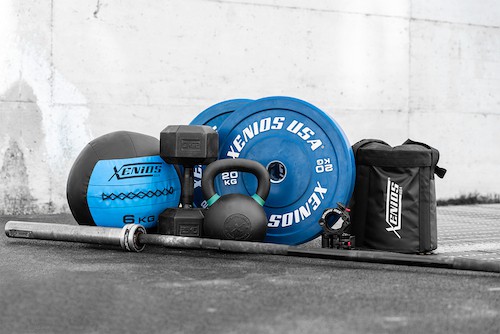
The customer physically interacts with the equipment during every single visit. He picks up a kettlebell, loads a rack, lies down on a bench, and works out on a rowing machine. Stability, ergonomics, and fluidity are constantly felt—even by those who lack the expertise to describe them in words.
A bench that wobbles under load sends a clear message about its construction. A sturdy rack allows the customer to focus on their form rather than the equipment. A well-maintained cardio machine makes long workouts sustainable.
For this reason, investment in equipment should be evaluated based on commercial as well as technical criteria: frequency of use, versatility in terms of programming, impact on capacity per slot, maintenance, expected lifespan, and the ability to support revenue-generating services. In a professional facility, the equipment does not merely support the commercial promise—it is an integral part of it.
How many athletes can your facility actually accommodate? Request a layout and capacity analysis: custom 3D design, assessment of station capacity per slot, and equipment sizing on your operating model.
More customers or better customers?
Growing up isn’t the same as filling every hour of the day. An overbooked facility can generate more revenue for a few months while simultaneously undermining the very service that had made it successful.
For a one-on-one coaching practice, the reasoning is even clearer: increasing the average value and duration of the client relationship is almost always more profitable than squeezing in more appointments, because the latter has a physical limit, whereas the former does not.
The growth model must remain consistent with the promise. If your positioning is based on personalized attention, quality, and measurable results, your organization must be able to deliver on that promise even as demand increases. Otherwise, every new customer you acquire is an existing customer you’re setting up to leave.
Where to take action first
If I were to rank the actions based on the ratio of results to effort, the order would be as follows.
- Track the four key metrics of the funnel—leads, scheduled trials, completed trials, and sign-ups—along with 12-month retention. Without these, every subsequent decision is just a guess.
- Write up a response protocol for contacts and assign it to someone. Zero cost, immediate results.
- Set reminders before the test. It’s the most cost-effective measure on the list.
- Build a 30-day onboarding process. This is where the difference between 66% and 78% retention comes into play.
- Set up your Google Business Profile and establish an ongoing review process.
- Check the actual capacity per slot and identify any bottlenecks in resources before increasing any acquisition budget.
- Only at this point—if the funnel converts and the structure holds up—should you increase traffic.
Ultimately, the most useful question for a manager isn’t “How do I find more customers?” It is: What concrete reasons am I giving someone to choose me, to achieve a result they can see, and to want to stay here next year? It is from that answer that the only kind of growth arises—the kind that doesn’t require starting over every January.


 Since 2009, we’ve been by your side, helping you create the perfect training spaces for Cross Training Boxes, Personal Trainer Studios, and professional Home Gyms.